
Dissolved Ozone Measurement in Pharmaceutical Water Systems
Dissolved Ozone Measurement in Pharmaceutical Water Systems
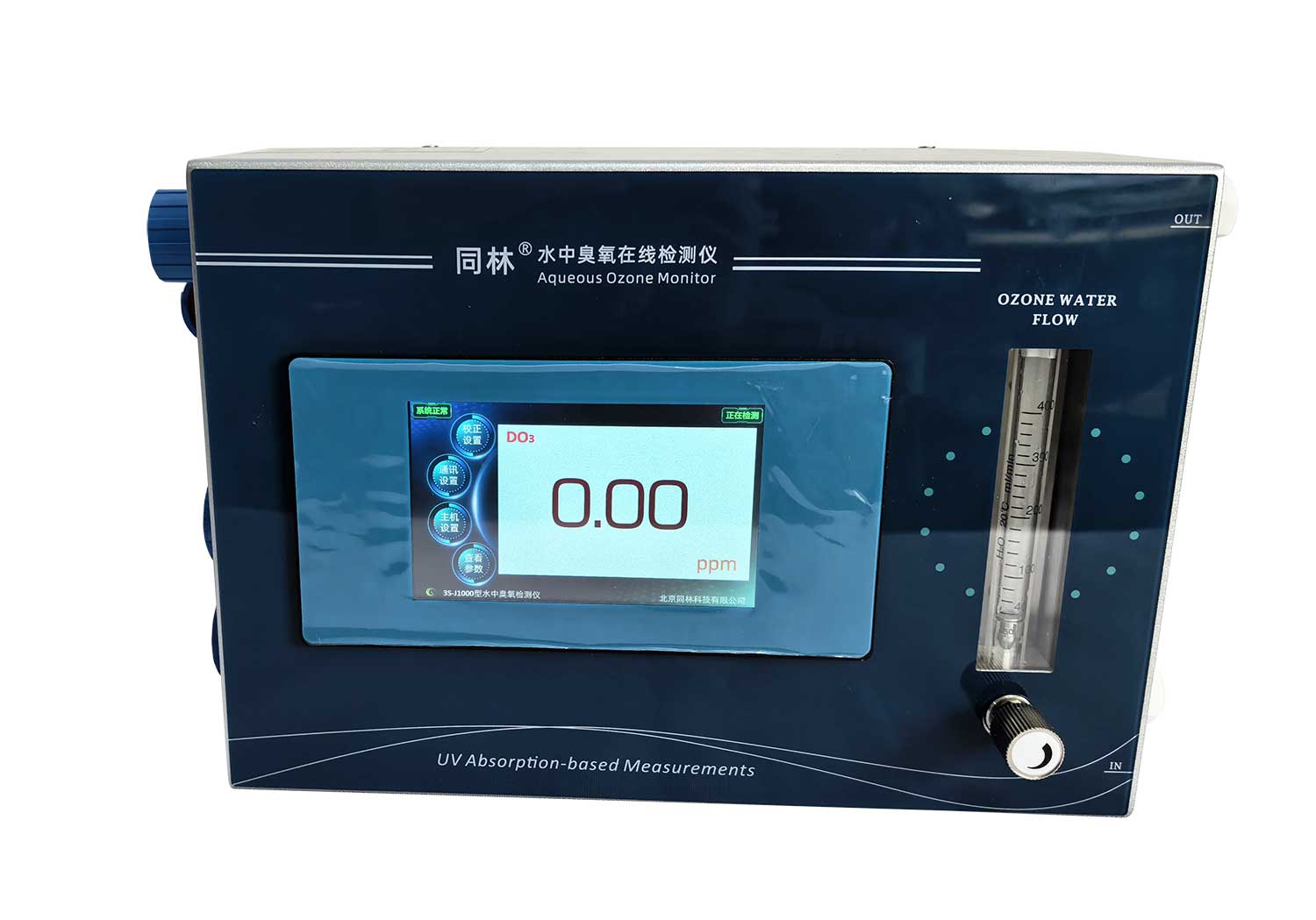
Pharmaceutical manufacturers rely on ozone as a powerful oxidizing agent for sanitizing purified water, Water for Injection (WFI), and clean-in-place (CIP) loops. Unlike traditional sanitants such as heat or chemicals, ozone leaves no residual byproducts once it decomposes back to oxygen, making it ideal for validated cleaning processes. However, the very property that makes ozone attractive—its high reactivity—also makes it challenging to control. Accurate dissolved ozone monitoring is therefore a regulatory and operational necessity, not an optional extra.
This guide explains why pharmaceutical water systems demand precise dissolved ozone measurement, the technologies used, where sensors should be installed, and how facilities can build a defensible monitoring strategy aligned with FDA, USP, and EU GMP expectations.
Why Pharmaceutical Water Systems Are Different
Unlike drinking water or industrial process loops, pharmaceutical water systems are governed by strict pharmacopeial standards. USP<1231>, USP<645>, and the FDA's Process Analytical Technology (PAT) guidance all push manufacturers toward continuous, real-time monitoring of critical quality attributes. Dissolved ozone, when used as a sanitizer, becomes one of those attributes.
Three characteristics make pharmaceutical systems uniquely demanding:
1. Low, Precise Target Concentrations
Typical sanitization cycles operate between 0.1 and 2.0 ppm of dissolved ozone. Maintaining this narrow band is critical: under-dosing fails to achieve the required log reduction of microorganisms, while over-dosing accelerates corrosion of stainless steel components and may leave behind oxidative residues that affect downstream product quality.
2. High-Purity Matrix Effects
WFI and purified water have extremely low conductivity and almost no buffering capacity. This means ozone decay kinetics behave very differently from those in municipal water. Sensors calibrated in tap water often drift when exposed to high-purity matrices, so pharmaceutical-grade dissolved ozone monitors must be validated for the specific water quality in use.
3. Validation and Documentation Burden
Every sensor in a GMP water system must be qualified under IQ/OQ/PQ protocols, with traceability to standards such as NIST or primary UV references. A monitoring device that cannot produce calibration certificates, raw signal data, and audit trails is essentially unusable in a regulated environment.
How Dissolved Ozone Is Measured
Several measurement principles exist, but pharmaceutical facilities typically choose between two: membrane-covered amperometric sensors and UV absorption probes.
Amperometric Membrane Sensors
These are the most common sensors in pharmaceutical water systems. A gas-permeable membrane allows dissolved ozone to diffuse into an electrochemical cell, where it reacts at a working electrode. The resulting current is proportional to ozone concentration. Modern designs use a cathode-anode configuration with an internal electrolyte, providing stable readings down to ppb levels.
- Advantages: Low cost, compact form factor, real-time output suitable for CIP feedback loops.
- Limitations: Membranes must be replaced periodically (typically 6–12 months); flow dependence requires a controlled sample stream; cross-sensitivity to chlorine dioxide or peroxide is possible.
UV Absorption Probes
UV absorption provides an absolute, non-consumptive measurement based on ozone's strong absorption peak at 254 nm. Because the technique references the Beer-Lambert law directly, it does not require frequent recalibration and is often used as a primary standard in pharmaceutical labs.
- Advantages: Drift-free, NIST-traceable, suitable for very low concentrations (ppb range), no membrane to replace.
- Limitations: Higher capital cost; sensitive to turbidity and bubbles; requires clean optical windows.
For most production-scale pharmaceutical water systems, an amperometric sensor is paired with a periodic UV reference check—offering the best balance of cost, response time, and traceability.
Where to Install Dissolved Ozone Sensors
Sensor placement is as important as sensor selection. A common mistake is to install a single probe at the ozone generator outlet and assume it represents the whole loop. In reality, ozone demand varies along the loop due to biofilm, biofilm-control agents, temperature gradients, and stainless steel surface area.
Recommended Monitoring Points
- Post-generator outlet: Confirms the generator is delivering the target dose and validates feed rate calculations.
- Loop return line: Verifies that residual ozone is being maintained throughout the distribution loop, supporting sanitization efficacy.
- Point of use (POU): The most critical locations, where residual ozone must be below the product-impact threshold (typically<0.1 ppm) before water contacts the product.
- Pre-UV destruct unit: Confirms ozone is being removed before storage or use, protecting product quality and preventing off-taste or oxidation damage.
Each monitoring point answers a different question. Skipping any of them creates a compliance gap that auditors will quickly identify.
Building a Monitoring Strategy for GMP Compliance
A defensible pharmaceutical ozone monitoring program rests on four pillars: sensor qualification, alarm management, data integrity, and routine verification.
1. Sensor Qualification and Calibration
Use sensors that ship with factory calibration certificates traceable to a primary standard. In-process calibration verification should be performed at least quarterly using a portable UV reference or a wet-chemistry method (e.g., Indigo Colorimetric per Standard Methods 4500-O3). Keep calibration records as part of the batch documentation.
2. Alarm Management
Pharmaceutical systems typically use a two-level alarm scheme: a low-level warning (e.g., 0.05 ppm) indicating that residual protection is dropping, and a high-level alarm (e.g., 1.0 ppm) indicating over-exposure risk. Both alarms should be linked to the facility's distributed control system (DCS) or batch record system, with operator action messages clearly defined in SOPs.
3. Data Integrity
21 CFR Part 11 and EU GMP Annex 11 require electronic records to be attributable, legible, contemporaneous, original, and accurate (ALCOA+). Choose a gas ozone monitor or dissolved ozone analyzer with secure data logging, audit trails, and export capabilities in OPC, Modbus, or PI tag formats. Avoid paper-based strip chart recorders except as a backup.
3. Routine Verification and Maintenance
Preventive maintenance should include monthly visual inspection, quarterly calibration checks, and annual membrane or optical window replacement as applicable. Trending historical data helps predict sensor drift before it becomes a compliance issue.
Common Pitfalls in Pharmaceutical Ozone Monitoring
Even well-designed systems can fail if these issues are not addressed:
- Single-point monitoring: One sensor cannot represent an entire loop; biofilm and demand create local pockets.
- Ignoring temperature compensation: Ozone solubility is strongly temperature-dependent; sensors without automatic compensation will drift in loops that swing from 15 °C to 25 °C.
- Stagnant sample lines: Long draw-off lines cause ozone to decay before reaching the sensor. Keep sample lines short, opaque, and turbulent.
- No UV destruct verification: Failure of the ozone destruction unit is a frequent root cause of product oxidation. A gas phase ozone monitor downstream of the destruct unit provides a final safety check.
Regulatory and Standards References
Pharmaceutical engineers should be familiar with several external standards and guidance documents. The United States Pharmacopeia (USP) general chapters<1231>and<645>describe water system design and monitoring expectations. The U.S. Food and Drug Administration's PAT Guidance for Industry explicitly encourages real-time process monitoring. For occupational safety around any ozone-rich vent or destruct skid, the OSHA chemical exposure limits set an 8-hour time-weighted average of 0.1 ppm—another reason a continuous gas-phase monitor is essential.
Conclusion
Dissolved ozone monitoring in pharmaceutical water systems is not simply a matter of installing a probe. It requires a thoughtful combination of appropriate sensor technology, strategic placement, GMP-grade data handling, and routine verification. When implemented correctly, a robust monitoring strategy supports both product quality and regulatory compliance, while reducing the operational risk of under- or over-exposure. As more pharmaceutical manufacturers adopt ozone for sustainable, residue-free sanitization, the demand for reliable, validated dissolved ozone instrumentation will continue to grow.
 Introduction to the Light Sour
 Online vs Offline Dissolved Oz
 Ozone Analyzer Calibration Int
 Understanding Ozone Concentrat